
Salt Lake County Resident Lookup Sources
There is no single official name roll for everyone in the county. Start with the record that matches the question, then use a second source to test place and time. Property records are held by the county Assessor and Recorder. Voter status belongs to Utah and County Elections. Court information is in Xchange and municipal court routes. Vital and historical records follow release rules. News, cemetery, custody, and business sources have their own limits.
| Record | What it may confirm | Where to search | Access |
|---|---|---|---|
| Property record | Owner, parcel, situs, mailing context | County Assessor | Public online search |
| Voter status | Current registration status and polling location | Utah voter lookup | Public fields, protected fields withheld |
| Court case | Party, case type, dates, history, public documents | Utah Courts Xchange | Account and document charges can apply |
| Vital or local index | Permitted birth, death, marriage, or divorce clue | Utah Vital Records or Archives | Release window and proof rules apply |
| Business or license filing | Filed entity and registered role | Utah Commerce or DOPL | Search or filtered list |
When a name points to a street, record the parcel and jurisdiction before making a second search. When it points to an older household, use the historical directory collections and cite the volume and page. A resident lookup is a process for weighing records, not a license to merge every same-name result.
Search Utah Courts Xchange
Xchange covers Utah district and justice court case information subject to public-access limits. District data includes domestic, civil, criminal, felony, and Class A misdemeanor matters. Justice data includes Class B and C matters, infractions, traffic, and small claims, with all small claims available from 2009. Most district courts were on CORIS by the end of 1998, while justice-court conversion dates vary.
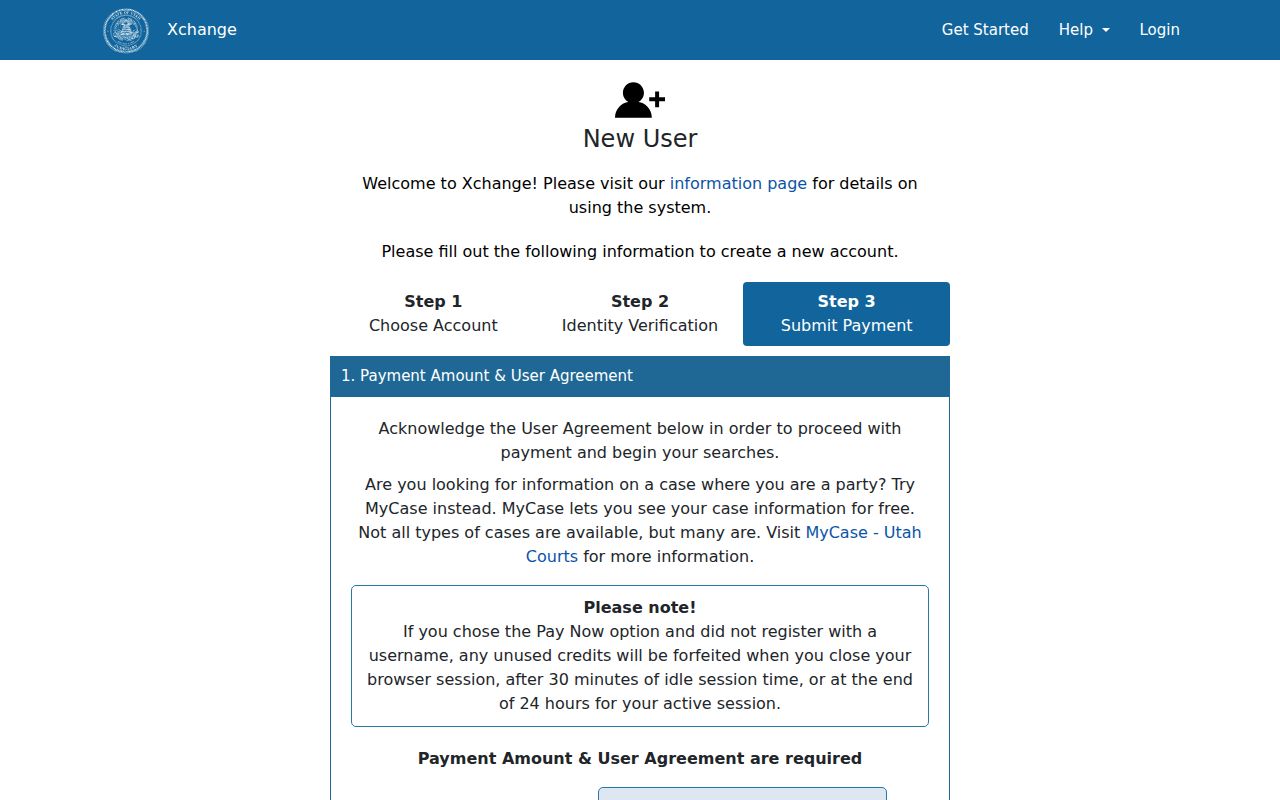
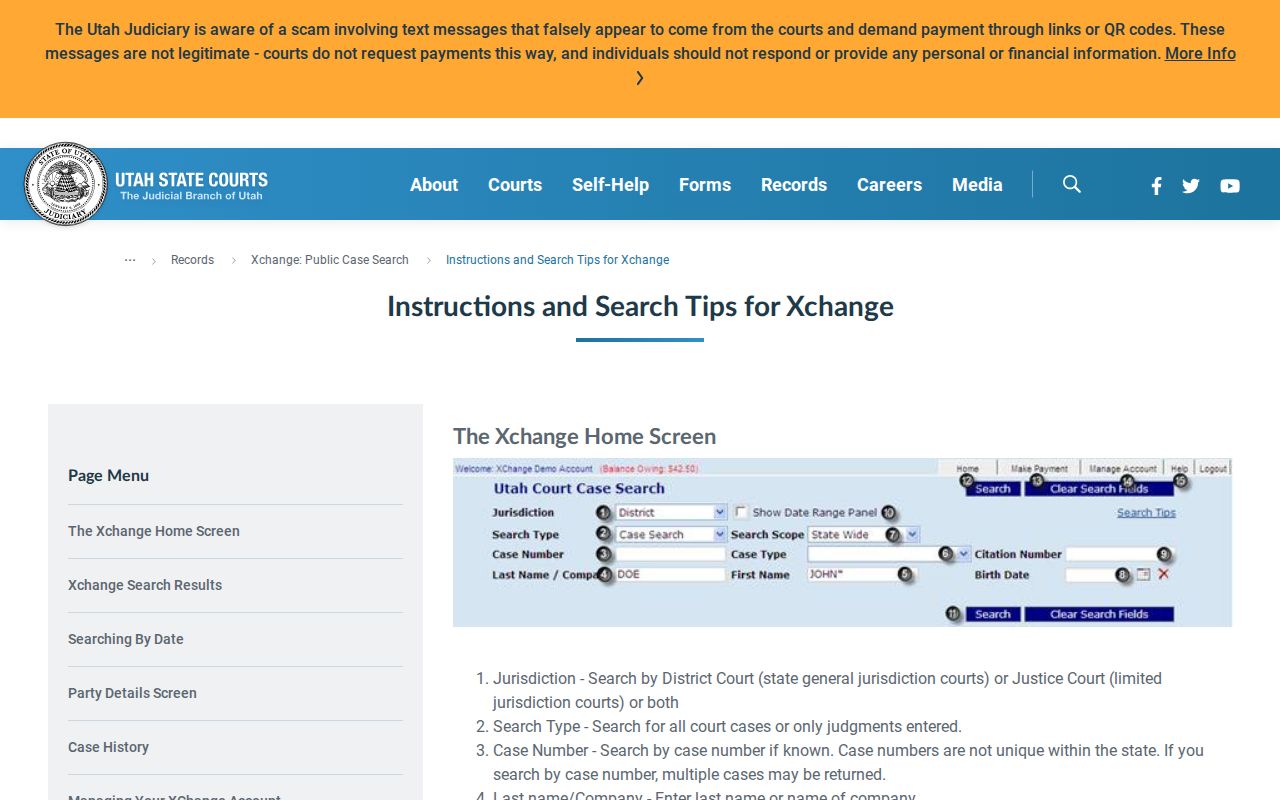
Use jurisdiction, search type, last name or company, first name, case type, county or court, case number, citation number, DOB when available, and date filters for filing, disposition, judgment entry, or judgment disposition. The wildcard `*` can help with name variants or middle initials. Results max out at 500. A guest account flow lists a $10 one-time account fee, $0.20 searches, and $1 documents. Public courthouse terminals and the Utah State Law Library offer other access paths.
The official Xchange guest registration route shows the account and access flow.
Read the Court Result Fields
A court result can show county, court location, case type, case number, filing date, party name, public DOB when displayed, party code, history, documents, judgments, orders, hearings, attorneys, judges, and result pages. Criminal-defendant detail may include agency, officer, prosecutor, citation, violation date, charge, plea, disposition, judge, proceedings, and account summary. An address appears only when filed and publicly available.
| Field | How to use it |
|---|---|
| Case number and court | Anchor the hit to a jurisdiction and case, not a name alone |
| Party type | Distinguish plaintiff, defendant, petitioner, respondent, heir, decedent, or another filed role |
| History and documents | Read the procedural record and check whether a public document is available |
| Disposition or judgment | Use the stated outcome; do not infer it from a case title or empty result |
The Xchange field guide is the safe sample schema used for a resident lookup record.
A name-only hit is not identity proof. Combine court, county, case type, date, party role, and another public record. If the result is missing, it may reflect sealing, expungement, juvenile status, indexing differences, or a historical cutoff.
Verify One Name Step by Step
Verification should move from a broad public clue to a record with a narrower date or role. The order below keeps a property or voter result from carrying more weight than it deserves.
- Write the name exactly as known, plus spelling variants, middle initial, city, street, ZIP, age range, or relationship.
- Anchor the name to a public place clue with the Assessor or current voter-status route, without copying protected voter fields.
- Search Xchange by name and narrow by court, case type, county, date, case number, citation, or public DOB when available.
- Check a permitted vital index, cemetery result, obituary, business filing, or historical directory for a separate time and place match.
- Save source URLs, dates, field labels, and the reason each record supports or fails the match.
- Docket
- The court’s running record of case events, filings, hearings, and orders.
- Index versus image
- An index points to a record. An image is the underlying scan or filed document, which may have separate access rules.
- Certified copy
- A copy issued and certified by the custodian for a formal use, often with an order, proof, or fee.
For a street-level question, hand the address work to the Salt Lake County street directory route. For an older address, use the historical directory collection rather than treating a current name result as a past household.
Voter Status and Public Fields
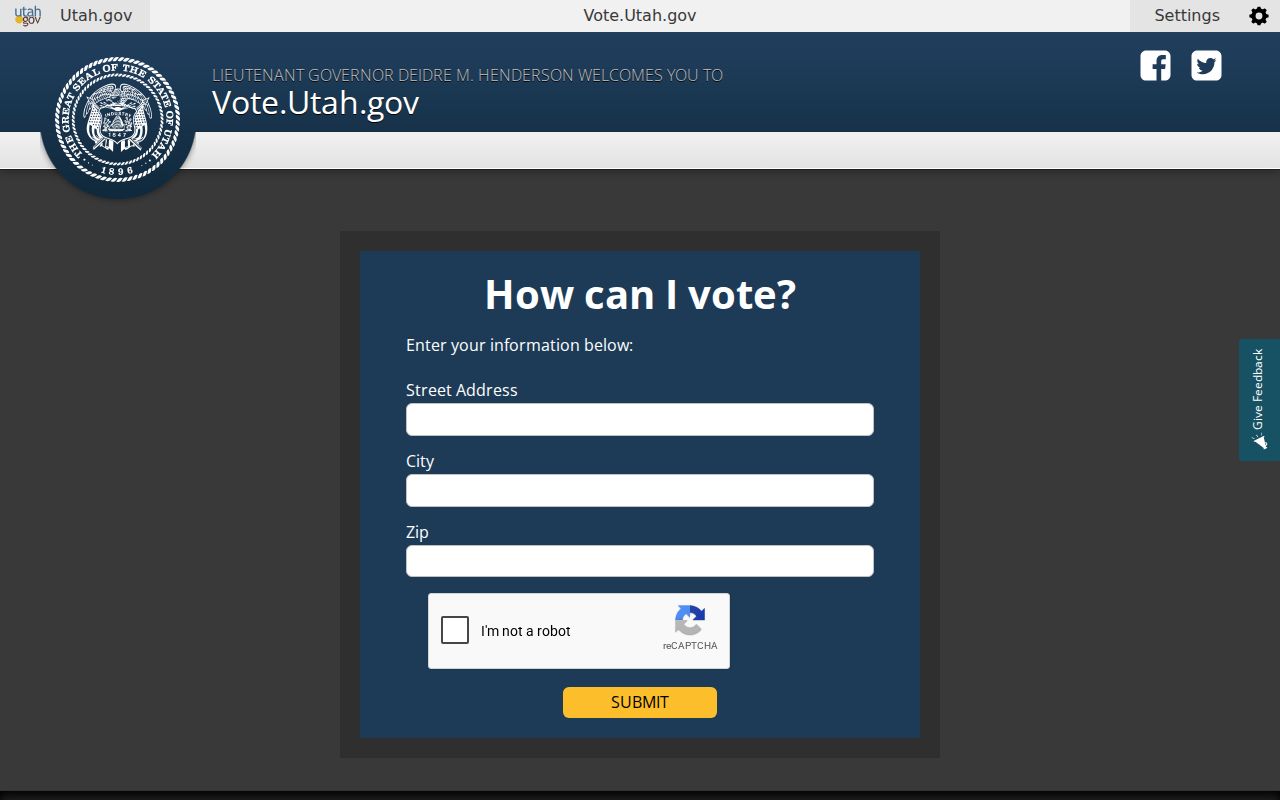
The Utah voter lookup can show current registration status and polling location. The accessible static source did not expose a definitive field-by-field schema for the live form. A larger public file can include legal name, voter ID, age range or year, residential and mailing address, county, precinct, congressional, legislative, school, county, and city districts, party status, active or inactive status, last update, and vote history.
Vote history shows which elections a voter participated in, not whom the voter chose. The statewide file is described as about 150 MB, tab-delimited, $1,050 one time, and emailed within one business day. Who-has-voted and absentee-sent reports are listed at $35 per election, with a limited even-year window. At-risk voters are anonymized in those reports.
The Utah voter-status lookup is the official current-status route.
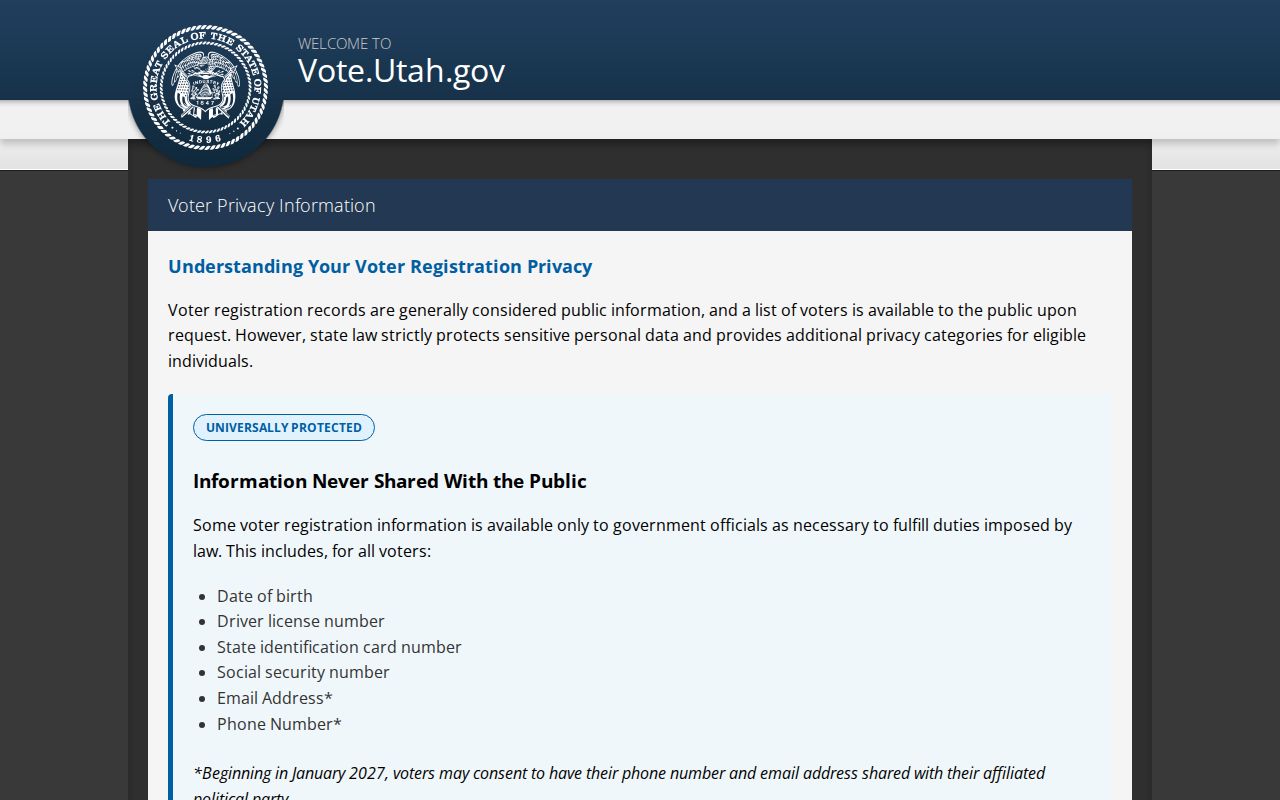
The Utah voter privacy information page identifies public and protected fields for a careful resident lookup.
Vital Records Need Proof
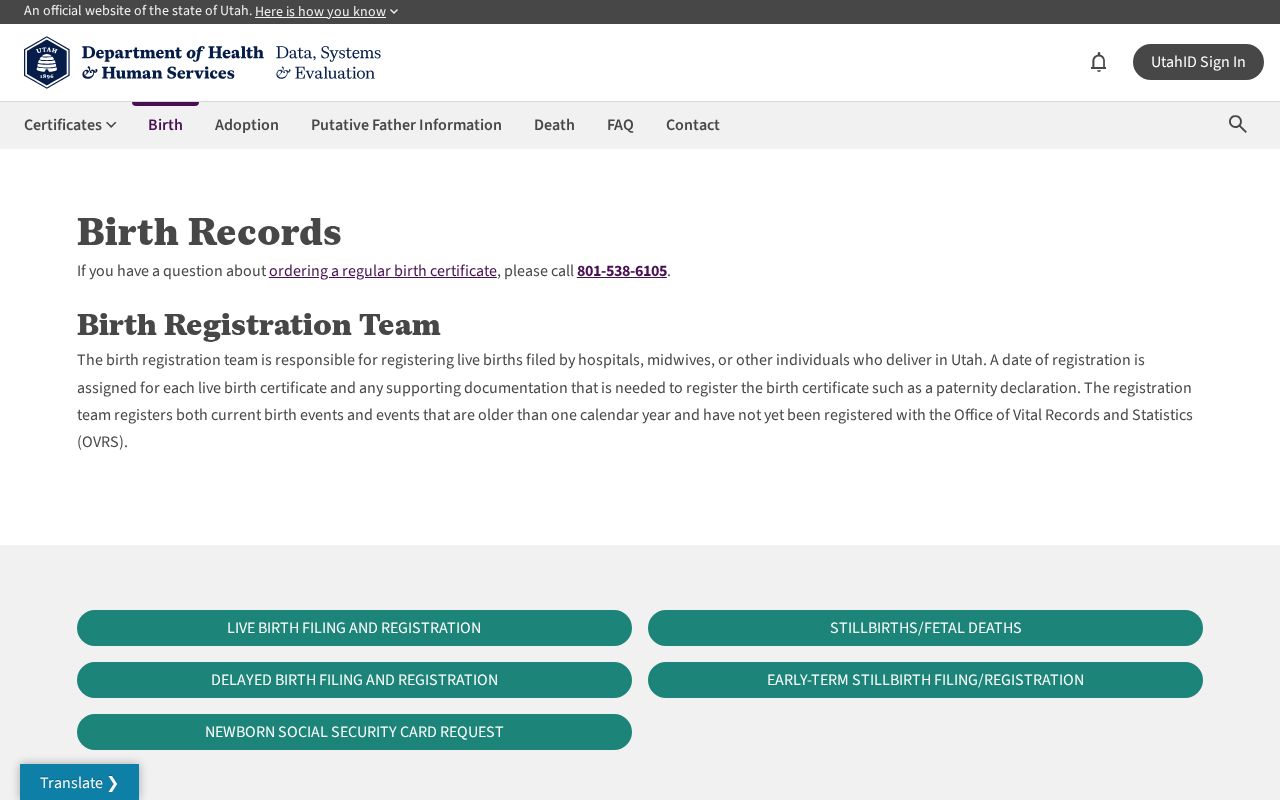
Utah births and deaths generally enter the state system from 1905 forward, while older historical material routes to State Archives or County Archives. Public release periods are 100 years for birth, 50 years for death, and 75 years for marriage and divorce. Before those periods end, the custodian requires a direct, tangible, legitimate interest under Utah Code §26B-8-125 and related provisions. A commercial list of names or addresses alone does not meet that standard.
The state order route lists identity, relationship, and fee requirements. The published FY25 schedule lists first birth at $22, death at $30, and marriage or divorce at $18, with additional, expedited, shipping, convenience, verification, enhanced-ID, and card charges. A CDC Utah page lists new first-copy amounts effective July 1, 2026, so verify the live September 2026 checkout. County Archives holds older death and marriage material, and the Cemetery map offers a separate burial-location clue.
The Utah Office of Vital Records order route explains the official request path.
Other Name-Match Trails
County Sheriff Corrections, Utah Department of Corrections, the Utah BCI registry, and the Federal Bureau of Prisons are distinct systems. County booking and processing averages 6 to 8 hours. UDC searches a name or UDC ID for current incarceration or probation or parole. The registry has its own terms and accuracy route. A court record is not a booking record, and a blank jail result does not prove there is no state, federal, or historic record.
Utah MyCash is another narrow lead. Its free search uses last or business name and optional first name, city, or ZIP. A result can show a holder, city or ZIP, amount, property ID, and relationship in the claim flow. The January 28, 2026 Treasurer release reported FY25 totals of $178.3 million reported and $43.4 million returned. Those dated amounts do not verify a person or address.
Correct the claim. Use the original custodian when a record is wrong, incomplete, sealed, or restricted. A missing public result may describe access limits rather than a missing life event.
Privacy Limits on a Resident Lookup
Utah voter privacy rules protect SSN, driver or state ID numbers, email, full DOB, phone, and signature. At-risk designation can cover domestic or dating violence threats, law enforcement, protective orders, armed forces members, public figures, and qualifying co-residents. Utah Safe at Home uses a substitute address for people who fear physical safety from abuse, stalking, trafficking, or sexual assault. Do not try to reverse it.
Courts restrict sealed, expunged, juvenile, adoption, child-welfare, civil-commitment, and listed private civil records. Vital access has its own release windows and proof rules. GRAMA under Utah Code Title 63G, Chapter 2 requests defined records from the custodian, not a new answer to a research question. The Utah Open Records Portal and county GRAMA route can help when a known record is missing, but they do not bypass protected categories.
Lawful use. A Salt Lake County resident lookup is for personal, lawful research, family history, reconnecting, and civic understanding. Never use a name or address result to stalk, harass, intimidate, or harm another person.
Note: Preserve the source date and the exact public field, because registration, court access, custody status, fees, and portal results can change.